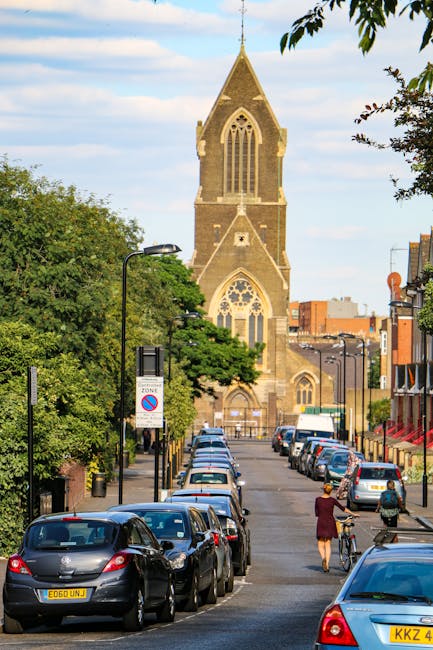
Stoke Newington Church Street removals parking rules: a practical guide for a smoother moving day
If you are planning a move on or near Stoke Newington Church Street, the parking side of the job can make the day feel either calm and organised or a bit of a scramble. The street is busy, space is tight, and removal vehicles need more than just a place to stop for five minutes. Understanding Stoke Newington Church Street removals parking rules helps you avoid penalties, delays, awkward unloading, and that awful moment when the van has to circle the block for the third time.
This guide explains how the parking and access side of a removals job usually works in a busy London high street setting, what to check before move day, and how to plan around the practical realities of loading, unloading, and keeping things moving. It also covers mistakes people often make, what to ask your removal team, and how to build a simple parking plan that actually works. Truth be told, a little preparation here saves a lot of stress later.
Why Stoke Newington Church Street removals parking rules Matters
Parking is not just a minor detail on moving day. On a street like Stoke Newington Church Street, it is often the difference between a clean, efficient move and a slow, frustrating one. When the vehicle cannot stop close enough to the entrance, everything gets harder: longer carries, more lifting, more congestion, more noise, and more chance that a neighbour, delivery driver, or cyclist gets caught in the middle. Nobody enjoys that.
For households, the issue is usually about convenience and timing. For flat moves, it can be about getting close to an entrance, a staircase, or a narrow hallway before the team starts loading. For offices and commercial spaces, the stakes rise again because staff access, equipment, and business downtime matter as well. If you are looking into flat removals or a larger house removal, parking access is one of the first things worth sorting out.
There is also a financial side. A vehicle that has to wait, move repeatedly, or park far away creates inefficiency. That can affect the overall cost of the move and, just as importantly, the mood on the day. To be fair, no one wants to be lugging a mattress through a busy street while trying to avoid double parkers. It is messy, avoidable, and a bit of a faff.
Good parking planning also helps protect property and people. A van stopping in the wrong place can create blind spots or force awkward lifting angles. With the right setup, the team can work more safely and quickly, and your belongings are less likely to get knocked, scratched, or delayed.
How Stoke Newington Church Street removals parking rules Works
In practical terms, removals parking rules usually come down to three things: where the vehicle can stop, how long it can stay there, and whether any special permission is needed. On a busy London street, that usually means checking the local parking restrictions, any loading-only windows, and the physical space available for a van or truck. It is rarely as simple as pulling up outside and hoping for the best.
Many removal teams will prefer a spot that allows safe loading or unloading right by the property. If that is not possible, they may need to use a nearby bay or a legal stopping point and work from there. The size of the vehicle matters too. A small man and van setup can sometimes work more flexibly than a larger lorry, while a bigger job may need a moving truck or dedicated removal truck hire. Different vehicles, different headaches. That is just the honest version.
On streets like Stoke Newington Church Street, practical issues often include passing traffic, busier pedestrian flow, local loading activity, and limited kerb space. The moving crew may have to coordinate closely with you, building staff, a concierge, or neighbours to avoid blocking entrances or causing disruption. If your property is in a block, the rules may also depend on building management rather than just the road layout, especially for office removals or a move involving shared access.
It also helps to think in terms of timing. Morning moves can be easier in some cases because the street is quieter. At other times, later slots may work better if nearby schools, deliveries, or commuter traffic make early access difficult. There is no one-size-fits-all answer, and that is exactly why planning beats guessing.
What usually needs checking in advance
- Whether the van can legally stop where you expect it to.
- Whether any loading restrictions apply at that time of day.
- How far the vehicle will be from your front door or building entrance.
- Whether the move needs a smaller vehicle, a larger one, or a shuttle approach.
- Whether building management, neighbours, or staff need notice.
- Whether the removal team has the right equipment for longer carries.
If you are comparing options, a well-organised removal service will usually ask about access before quoting. That is a good sign. It means they are thinking like movers, not just like schedulers.
Key Benefits and Practical Advantages
Getting the parking side right is not glamorous, but it pays off in several very real ways. The most obvious benefit is time. When the vehicle is positioned properly, the crew can load and unload faster, and the whole day tends to feel less pressured. You will notice it in the rhythm of the move: fewer stops, fewer awkward waits, fewer little delays that somehow become big delays.
Another advantage is safety. Shorter carrying distances reduce strain on the team and lower the chance of an item being dropped or damaged. That matters especially for fragile items, awkward furniture, and anything bulky. For example, if you are moving a piano or similarly delicate item, access planning becomes absolutely central; services such as piano removals are usually arranged with this level of care in mind.
There is also less friction with neighbours and other road users. A properly planned move is quieter, tidier, and generally less disruptive. In a place like Stoke Newington, where streets can feel lively from early morning through the evening, that is worth a lot. You do not want to be the person causing a horn-blaring stand-off before 9 a.m. That sort of memory lingers.
And then there is peace of mind. Once you know where the vehicle is going, who is guiding it, and how long it can stay, the rest of the day starts to feel manageable. That calm matters. It is one of those things people only appreciate fully after they have had a chaotic move and swear never again.
| Parking approach | Best for | Main advantage | Common drawback |
|---|---|---|---|
| Direct kerbside loading | Short, simple domestic moves | Fastest loading and unloading | Can be hard to secure on a busy street |
| Nearby legal loading bay | Most standard removals | More reliable than hoping for a space outside | May mean a slightly longer carry |
| Smaller van setup | Flats, student moves, lighter loads | More flexible in tight streets | May require multiple trips |
| Larger truck with planned access | House moves, business relocations, full contents moves | Fewer trips and more capacity | Needs stronger parking planning |
Who This Is For and When It Makes Sense
This topic matters to anyone moving to, from, or around Stoke Newington Church Street, but it is especially relevant if your property sits on or near a narrow, busy road where stopping space is limited. That includes tenants in flats, homeowners moving a full household, students with tight move-in windows, and businesses relocating stock or equipment.
If you are in a flat, parking and access can be more complicated than the move itself. Shared entrances, stairwells, lifts, and resident-only restrictions all add layers. That is why people arranging flat removals tend to benefit from a very clear parking plan. The same goes for anyone who needs packing support, because the more you can pre-stage items, the less time the van needs to remain parked. For that, packing and boxes or packing and unpacking services can make a real difference.
Students often underestimate the parking issue. A few boxes and a bike can look simple on paper, then suddenly there is no safe place for a vehicle to pause. If that sounds familiar, a smaller load and a flexible vehicle may be the smarter option. A student removals approach is often about agility, not brute force.
Commercial clients need to think differently again. Offices, studios, and retail spaces usually have tighter scheduling, more equipment, and less room for disruption. For those moves, parking is not a side issue; it is part of operational continuity. If that is your situation, look at commercial moves or office relocation services as part of the planning process.
Step-by-Step Guidance
Here is a practical way to approach Stoke Newington Church Street removals parking rules without overcomplicating it. You do not need to become a parking expert. You just need a clean process.
- Confirm the exact move address and access point. Front entrance, rear entrance, side gate, loading lobby, basement route - all of it matters.
- Measure the kind of vehicle likely to be used. A small van and a larger removals truck do not need the same space or turning room.
- Check whether your street space is likely to be available. Busy high street traffic, trading hours, and residential parking all affect this.
- Ask about loading and unloading timing. Some moves are smoother early, while others are better slightly later when the street is calmer.
- Decide whether you need a smaller vehicle or a bigger one. If the access is tight, a removal van can be more practical than a larger truck.
- Pre-pack items as much as possible. The less time spent sorting on the pavement, the better.
- Keep a clear communication line with your removal team. One person should be the main point of contact on the day.
- Prepare for a Plan B. If the first stopping point is blocked, know the nearest realistic alternative.
If you are using a team that handles a variety of moves, from home moves to larger jobs involving storage, they should be able to suggest a vehicle and access strategy that fits your street conditions. Sometimes that means building in a little extra time. Sometimes it means splitting the move. Sometimes it means saying, quite sensibly, that the smallest van is the best fit. Simple, but effective.
Expert Tips for Better Results
Here is the part that tends to save people the most trouble: think like a mover, not like a driver. The goal is not just to park; it is to create a working zone where boxes, furniture, and people can move safely. That mindset changes the whole job.
First tip: build a loading sequence before move day. Put the heaviest or most awkward items closest to the exit if possible. That reduces the time the vehicle needs to stay in position. For example, if you are moving a sofa, wardrobe, or dining table, have those routes clear first. If you need help with heavier household pieces, furniture removals or even furniture pick up for unwanted items can reduce the pressure on move day.
Second tip: keep one person outside when the van arrives, if it is safe to do so. A quick hand signal from the pavement can be worth more than five shouted instructions through a window. It sounds almost too basic, but on a busy street, clarity wins.
Third tip: protect the building relationship. If your move might briefly obstruct a shared entrance or pavement edge, let neighbours or building management know early. A polite heads-up often prevents complaints later. Nobody loves surprises in communal hallways.
Fourth tip: choose the vehicle size with honesty. People sometimes overestimate what can fit in a single load. That is where planning for a second trip, a bigger vehicle, or short-term storage can be the calmer choice.
Fifth tip: keep the essentials separate. Keys, documents, chargers, medications, kettle stuff, the little bits. If the van needs to park a little further away than expected, you will still have what you need at hand.
In our experience, the smoothest removals on busy London streets are rarely the most dramatic ones. They are the ones where parking, timing, packing, and communication were handled early, then left to do their job quietly.
Common Mistakes to Avoid
One of the most common mistakes is assuming a space will be available just because it usually looks fine when you walk past. Streets change by the hour. Deliveries, resident parking, school traffic, and local trade activity can all reshape the picture by move day.
Another error is leaving parking planning until the morning of the move. By then, you are reactive, not prepared. That is how people end up paying for rushed fixes, waiting around, or carrying items much farther than they expected. A little planning the day before is often enough to avoid that mess.
People also forget to account for the size and height of the vehicle. A narrow street might look usable for a van, then suddenly you realise the turning circle is awkward, or the truck blocks too much of the lane. Bigger is not always better. Not on a street like this.
Other common slip-ups include:
- Not checking whether the property has a rear or side access route.
- Not telling the removal team about lift restrictions or stair-only access.
- Forgetting to reserve enough time for unloading.
- Assuming the same parking setup will work for both loading and unloading addresses.
- Leaving packing until the final hour, which always feels heroic and never really is.
There is also a social mistake: ignoring nearby residents or business users. On a compact street, a little courtesy goes a long way. It makes the day easier, and honestly, it keeps tempers down. That alone is worth the effort.
Tools, Resources and Recommendations
You do not need a huge toolkit to manage removals parking well, but a few simple items help more than people expect. A printed floor plan, a door number note, a basic checklist, a phone charged to full, and one agreed contact person can prevent the classic "where is the driver?" chaos.
For heavier moves or jobs involving larger furniture, using the right vehicle and handling support matters. A general removals team may be ideal for a full household move, while a more focused man with a van or man with van option can be better for smaller loads or tighter streets. If your move is time-sensitive, same-day removals can help, though parking planning becomes even more important when time is short.
Recommended practical steps:
- Write down the exact postcode, entrance instructions, and preferred loading point.
- Prepare photos of the frontage or access route for the removal team.
- Keep a fallback location in mind if the first stopping point is occupied.
- Use labelled boxes so the unloading order is easy to follow.
- Make sure your moving day essentials travel separately from the main load.
If you are comparing providers, it is also sensible to check things like insurance cover, payment security, and service terms. Those are not the glamorous parts of moving, but they matter. You can review insurance and safety, payment and security, and the terms and conditions before you book. A careful customer is rarely the one who regrets the move later.
Law, Compliance, Standards, or Best Practice
Because parking and stopping on public roads can involve legal restrictions, it is sensible to treat this as a compliance issue, not just a convenience issue. The exact rules depend on local restrictions, road markings, signs, and any permissions or exemptions that may be needed. It is not wise to guess. If a vehicle stops somewhere it should not, the risk is simple: delay, dispute, or a penalty.
In practice, a good removals plan follows three principles. First, respect road signs and marked restrictions. Second, keep access safe for pedestrians, cyclists, and other traffic. Third, avoid creating unnecessary obstruction. Those principles sound obvious, but they are easy to slip on when the pressure is on and everyone is carrying boxes at once.
Best practice also means risk-aware handling. Larger items should be moved with enough space to turn, lift, and set down safely. That is where health and safety policy and insurance and safety become part of the conversation rather than hidden paperwork. Good movers usually think this way already, and a well-informed customer should feel comfortable asking about it.
If you are moving a business or office, compliance may also include building rules, service lift booking, loading windows, and contractor access procedures. For larger organisations, choosing experienced removal companies or office relocation services can help avoid a lot of administrative friction.
Options, Methods, or Comparison Table
There is more than one way to handle a move on Stoke Newington Church Street. The best choice depends on vehicle size, access, timing, and how much you need to move. Here is a plain-English comparison.
| Method | Best use case | Strengths | Watch-outs |
|---|---|---|---|
| Small van move | Studios, small flats, lighter loads | Easy to place, quick around tight corners | May need more than one trip |
| Standard removals vehicle | Typical household moves | Balanced capacity and practicality | Needs better parking planning than a small van |
| Large truck move | Full houses, offices, larger furniture | Fewer trips, better for big loads | Harder to park and manoeuvre on busy streets |
| Split load with storage | Moves with timing gaps or limited access | Flexible and less rushed | Needs more coordination and possibly extra handling |
If the parking situation looks awkward, a smaller vehicle or staged move can be the smarter call. People sometimes think that means a less professional move. It does not. It means a move matched to the street. Which is just sensible, really.
Case Study or Real-World Example
Picture a typical move on a weekday morning near Stoke Newington Church Street. A couple is moving out of a first-floor flat with a sofa, bed frames, boxes, and a few awkward extras like a mirror and a desk chair that seems to catch every doorway on the way out. The street is active, with early deliveries and people heading in and out of shops. Not chaotic, but busy enough.
Instead of assuming the van can stop directly outside, the move is planned with a nearby legal stopping point in mind and one person assigned to guide the vehicle when it arrives. The boxes are already packed, fragile items are separated, and the larger furniture is disassembled where possible. The crew uses a smaller vehicle rather than a huge truck, which makes the loading simpler and reduces the risk of blocking more road space than needed.
The result? Less waiting, fewer awkward pauses, and no frantic last-minute reshuffling. The whole job still takes effort, of course. Moving always does. But the parking part does not become the thing that tips the day over. That is the aim.
In the same area, a business relocating equipment from a small office would likely take a different approach. They might use a larger vehicle, but book a specific loading window, keep staff informed, and arrange access to minimise disruption. Different move, different strategy. Same principle: the street sets the terms, so plan around the street.
Practical Checklist
Use this quick checklist before moving day. It is the sort of thing you can print, scribble on, or save on your phone.
- Confirm the full address and the exact entrance to be used.
- Decide whether the move needs a small van, standard removals vehicle, or larger truck.
- Check how close the vehicle can legally and safely stop.
- Identify a backup stopping point if the first one is unavailable.
- Tell the removal team about stairs, lifts, narrow hallways, or rear access.
- Prepare boxes and label fragile items clearly.
- Separate essentials, keys, and documents for easy access.
- Notify neighbours or building management if disruption is likely.
- Review insurance, safety, payment, and terms before booking.
- Keep your phone charged and one contact person available on the day.
Expert summary: If you are moving on or near Stoke Newington Church Street, parking planning is not a side task. It is a core part of the move. Get the stopping point, vehicle size, timing, and access route sorted early, and the rest of the day becomes much more manageable. A bit of calm now saves a lot of fuss later.
Conclusion
Stoke Newington Church Street removals parking rules may sound like a small detail, but in practice they shape the whole moving day. The right vehicle, the right stopping point, and the right timing can keep things moving safely and reduce stress for everyone involved. Whether you are handling a flat move, a family house move, a student relocation, or a commercial project, the same rule applies: do the parking thinking before the boxes start moving.
If you take one thing from this guide, let it be this: do not leave parking to chance. A few minutes of planning usually makes the difference between a tidy, efficient move and one that feels like a slow chase around the block. And honestly, nobody needs that kind of drama on moving day.
For a move that feels better organised from the start, explore the right support, compare the options, and choose the vehicle setup that fits your street as well as your belongings.
Get a free quote today and see how much you can save.
Frequently Asked Questions
Do I need special permission for removals parking on Stoke Newington Church Street?
It depends on the exact stopping point, the time of day, and the road restrictions in place. In many cases, the key issue is whether the vehicle can legally stop and load without causing an obstruction. If you are unsure, plan early and ask your removals provider to review the access with you.
What size vehicle is best for a move on a busy high street?
That depends on the load and the available space. A smaller van can be easier to place on a tight street, while a larger truck may suit a full household move if there is enough access. The best choice is the one that balances parking practicality with load size.
Can a removals van just wait outside while we load?
Not always. Waiting is only sensible if it is legal and safe to do so, and if it does not block traffic or pedestrians. On a busy street, a loading bay or another legal stopping arrangement may be better.
What happens if the van cannot park near the property?
The team may need to use a nearby legal stopping point and carry items further, or adjust the plan with a smaller vehicle or additional trips. This is why access details matter so much before move day.
Is a small van always better than a large removal truck?
No. A small van is more flexible, but it may require more trips. A larger truck can be more efficient for big moves if the street allows it. The best option depends on the load, timing, and access.
How early should I plan parking for a removals job?
As early as possible, ideally during the booking stage. Parking should not be left until the morning of the move, especially in a busy area where stopping space is limited.
Do flat removals need different parking planning from house removals?
Usually, yes. Flats often involve shared entrances, stairs, lifts, and tighter access points, so the parking and carry route need more careful thought. House moves can still be tricky, but flats often have a few extra moving parts.
What should I tell the removals company before the day?
Give them the full address, entrance details, any access restrictions, vehicle concerns, lift information, and anything that might affect parking or unloading. Clear information up front saves time later.
Can storage help if parking or access is difficult?
Yes. If the move needs to be split or if timing is tight, short-term storage can make the process calmer and more manageable. It is especially useful when access is awkward or the schedule is not lining up neatly.
Are same-day removals realistic on a street like this?
They can be, but they depend heavily on availability, access, and parking conditions. Same-day moves leave less room for error, so parking planning becomes even more important.
How do I reduce delays on moving day?
Pack early, label clearly, keep one point of contact, choose the right vehicle size, and make sure the team knows where they can legally and safely stop. Small improvements like this make a bigger difference than people expect.
Should I ask about insurance and safety before booking?
Absolutely. A reliable provider should be open about how they handle safety, loading, transport, and customer protection. It is a normal and sensible question, not a fussy one.
What is the easiest way to make the move feel less stressful?
Keep the parking plan simple, confirm the access route early, and do not leave packing or communication to the last minute. The less you have to improvise on the day, the better it tends to feel. A bit of order goes a long way.
Where should I go next if I am still comparing move options?
Start with the type of move you need, then match it to the right vehicle and service style. If you are planning a household move, a flat relocation, or a business move, it helps to compare the practical fit before you commit. That way, the move works with the street instead of fighting it.